Contents
Working dossier for tutorial review. Sections I to X follow the ten executive-summary headings.
Already on record, decided or checked against its source.
A hypothesis for interviews, pricing or the forecast.
A fee, price or legal point queued for official confirmation.
Note // The motion, graphics and visual identity are still in research and development, to be developed and iterated. The current work is a placeholder for the overall mood.
In figures
The material is in hand, the demand is untested, and nothing is priced until the research lands.
Founder and creative director. No staff, no subcontractors.
Where most published offers a small-budget artist can reach sit.
Where full identities from named studios start.
UK music industry GVA, 2025. UK Music.
of 5,039 artists earned under $1,000 from music in 2025. Ditto Music.
+ VAT a day: hot desk, Granite Exchange, Newry.
Core segments: alternative musicians, fashion labels, performers.
Client interviews to date. Two to three by 28 February 2027.
Routes: Bastard Couture case study, direct approach, online portfolio.
Studios and services reviewed, in three tiers.
Sales to date. None are claimed.
Final submission, 11:00. Assessments 40/40/20.
Proposition
Experimental visual studio for cultural identities.
Lockjaw Labs builds visual identities for artists, cultural identities, musicians, fashion labels and performers whose identity is already strong but whose visual language has not caught up with it.
The studio works through forensic aesthetics and archival logic. A client's identity is examined, sectioned and catalogued, then rebuilt as a system of marks, type, imagery and rules that holds across every surface, without sanding off the chaos that made it worth formalising.
Human-directed. Technology-enabled. Conceptually driven.
An independent practice exploring AI as part of how the work is made. The work leads; the method is what makes it distinctive and, in time, scalable. Direction, judgement and final approval stay human.
Stark, industrial, archival: brutalist type, clinical light. This is the studio's own wrapper: clients leave with their own identity formalised, not Lockjaw's skin.
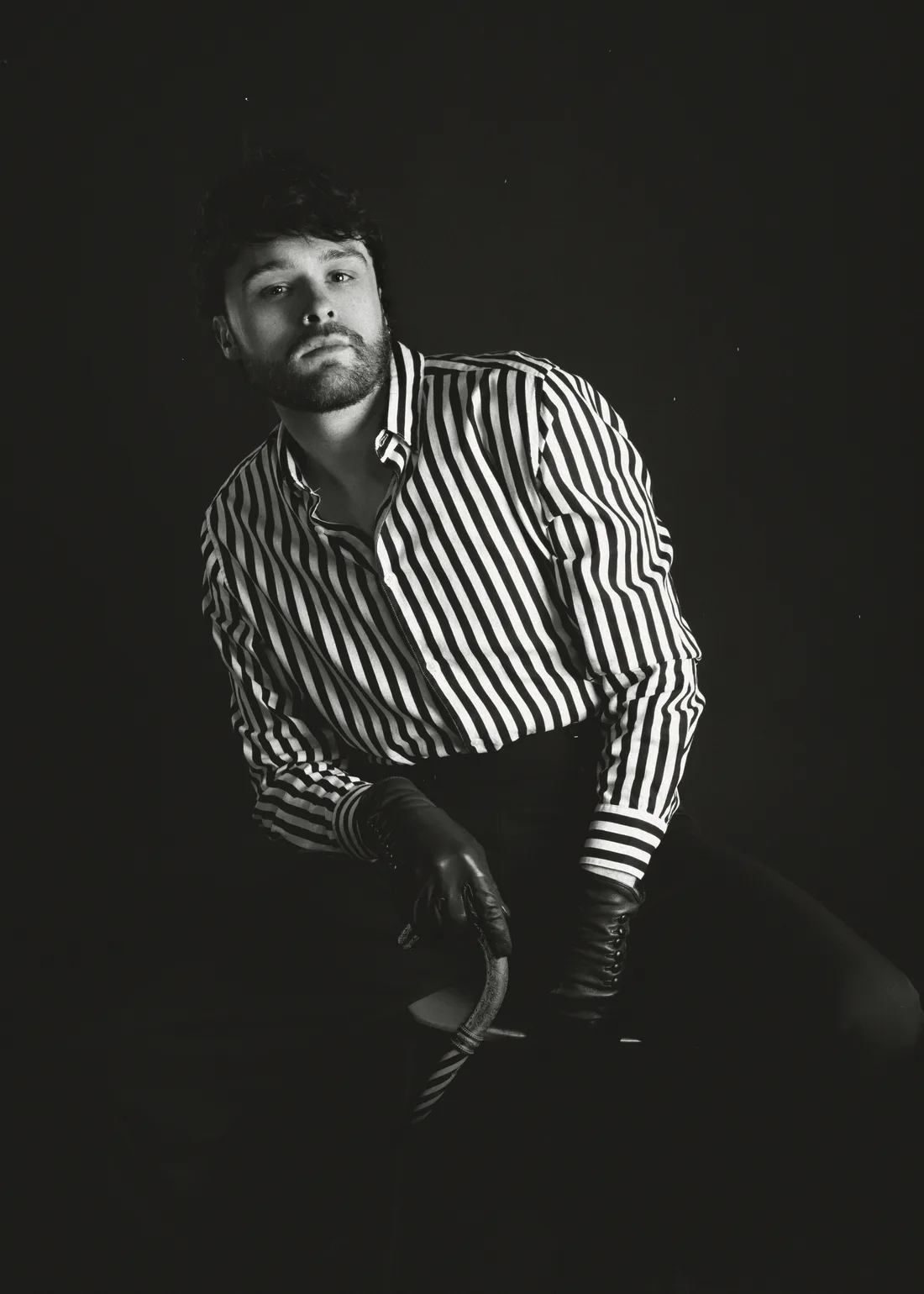
The studio
Pricing
Fixed packages suit a new studio with no client history. They are easier to sell than a day rate, easier to forecast as units × value, and they mark the edge of the job before it starts. Contents and prices will be set by 31 January 2027 against the published market below [A2].
Most offers a small-budget artist can reach sit at £100–£500; full identities from named studios start at about £800. Two 2026 surveys put average UK design day rates at about £250 to £385.
Wordmark or logo, palette, type pairing, avatar and banner set. Two rounds of changes.
Inside the band a small-budget artist can reach.
Package I, plus secondary mark, house image treatment, ten-page guidelines and artwork for one release.
Where named studios start a full identity.
A full system plus campaign direction: release artwork, lookbook or press-shot direction, three motion loops, stage or merch graphics.
Just under Studio Vera's £1,850.
For better-funded clients: labels, management, grant-funded artists, fashion brands with a launch budget. Direction scoped up, once case studies are live. Tested in the February interviews.
Market
The opportunity and the target market.
The client is a small creative business: a band, a label, a performer. The identity already exists in the work; what is missing is a visual language coherent enough to carry it from a record sleeve to a stage [A3]. These clients buy carefully, over a long process, and on trust in the person doing the work.
The sector is large, growing and mostly very small businesses; the artists Lockjaw serves mostly earn little from music. Prices are set for small budgets. Likely budget sources, to test: day jobs, funding (Arts Council NI, Help Musicians, PRS Foundation), label or management money. The February interviews ask how artists pay for visual work, not only whether they want it.
Belfast carries the infrastructure: Oh Yeah Music Centre and the NI Music Prize; Output Belfast, whose 2025 conference ran a panel on styling a band; and Vault Artist Studios, with more than 140 member artists.
Legal and ethics
Competitive field
Marketplaces and fixed-price online studios
Music and fashion specialists
A full identity system at the price of a fixed package, with bespoke art direction and a rigorous identity system a generalist cannot supply [A6].
Tier 2 are the direct competitors; tiers 1 and 3 are adjacent. Desk research so far is consistent with A8: local studios serve mainstream clients, specialists cluster in London and Dublin, mostly unpriced. Not yet tested by interviews. Prices read 23 Nov 2026.
Route to market
Lockjaw sells to artists and small businesses, so marketing follows the business-to-business pattern: relationships first, a considered purchase, and a method the client can see before they commit [A7].
Bastard Couture, the fashion label the founder co-founded, is the first client: an unpaid commission, published from brief to finished system. In development.
In person in Newry and Belfast, by message further afield. Artists and labels are shown the method at work.
An online portfolio with packages listed, so distant clients can commission without meeting. Planned for 31 March 2027.
The brand is its own physical evidence: silver hardware, brutalist type, clinical light, and an archive no other studio can supply.
In motion
Motion graphics created from the founder's own medical scans. Early aesthetic development: a placeholder for the overall mood, still to be developed and iterated.
Finance and operations
Start-up costs are low: no premises, and the main equipment is owned. No sales yet, and none are claimed.
Year one, matching the goal of three paid commissions: 2 × Specimen + 1 × System = £1,550. About £640 after essential costs, £515 all in, before tax and the founder's time. A proof-of-concept year, not a living wage: the return is tested prices, live case studies and a pipeline.
Average sale £517 (three year-one sales). Essential: £910 ÷ £517 ≈ 1.8. All in: £1,040 ÷ £517 ≈ 2.0. Two packages cover it, with nothing to spare; three gives a margin.
The Bastard Couture commission is unpaid and earns nothing in the forecast; its return is the case study. Owned equipment: Apple MacBook (M5) and a resin 3D printer.
Plan
The goals below are measurable and dated. Each is a target, not a result.
Competitor research complete; package contents and prices set.
To testTwo to three interviews with prospective clients, completed and written up.
To testBastard Couture identity complete as a case study; online portfolio live with packages listed.
To testFinal module submission.
EstablishedThree paid commissions within 12 months of registering, at least one from a client outside Northern Ireland.
To testLinked AI workflows and specialised agent systems under human direction. An ambition, in early development.
To testUKIPO trade mark search for LOCKJAW and LOCKJAW LABS.
Software list beyond Adobe; check the draft running costs.
Confirm the draft package contents and prices.
Interview guide, survey and consent sheet.
Design language: colour, type and mark settled from version 1.
AI: ethics position, client terms, local models.
Done: project record, pre-executive summary, executive summary, R&D plan.
Done: desk research and a verified evidence table.
Next: the development workbook, worked in tandem with Bastard Couture.
Academic plan and questions for the tutor: see X.2.
Everything in priority order: see X.3.
Academic plan
Lockjaw Labs is developed for Professional Development with Business Planning (BA (Hons) Creative Imaging, Southern Regional College / The Open University), in parallel with Bastard Couture. Worked up in full so either business can carry the submission.
2,500 words. Exploratory process, viability and market analysis.
Lockjaw: R&D plan approved; desk research and a verified evidence table done; interviews to come.
750 words minimum, financial projections, a 5-minute presentation to peers.
Lockjaw: executive summary at draft 2; prices, forecast and marketing plan to come.
2,000-word critical reflection on the business-planning process.
Lockjaw: reflective log to start.
Pass mark 40% each. Separate bound A4 documents with branded covers. Submission 20 April 2027, 11:00. Tutor Noel Somerville; course leader Mark Turbitt.
Does the 2,500-word count include tables, captions and references?
Do interviews with prospective clients need college ethics approval?
What are the three separate submission dates?
Web address chosen: lockjawlabs.co.uk, for a UK studio. Any concerns before it is bought?
Master to-do list
In priority order. Everything else rides on the brand and the portfolio, so they come first.
Clear LOCKJAW against Lockjaw Records, which works in music. Nothing is bought or locked until it clears.
Once the name clears: lockjawlabs.co.uk and studio@lockjawlabs.co.uk; wordmark, colour, type and motion settled.
Sort existing work; build the three founding case studies below.
Self-initiated and unpaid. Shown as case studies, never as sales.
Lockjaw's method applied to its first client: the founder.
Identity completed and documented end to end.
Previous projects re-presented inside the Lockjaw system.
Verify the draft prices and running costs, AI tools included.
Interview guide, survey and consent sheet first.
Ethics statement and client terms.
Then direct approaches to the first prospects.
Start the reflective log now for the Professional Review.
Sources and assumptions
Codes in square brackets, such as [A2], point to the assumption register below, not to sources. Each is open until research or interviews settle it.
Package contents and prices. Market ladder read; prices drafted, not tested with clients.
Artists with strong identities lack a coherent visual language and would pay to fix it. Interviews by 28 Feb 2027.
Shared workspace near Newry at a manageable day rate. Granite Exchange found; rate to re-check.
The ICO data protection fee may be due. Exemption check still to run.
A gap between generalists and templates and high-end agencies. Desk research consistent; interviews to test.
Three marketing routes: case study, direct approach, online portfolio.
Local studios serve mainstream clients; specialists cluster in larger cities. Desk research consistent.
Equipment and software. Hardware owned; software costed in draft on page 12.
Turnover stays well below the £90,000 VAT threshold. Threshold to re-check before submission.
DCMS Economic Estimates: GVA 2024 (gov.uk, 5 Feb 2026) and Business Demographics 2025 (27 Nov 2025). Creative PEC, Skills Audit: Design and designer fashion (2026). NISRA, creative industries (2 Apr 2026). UK Music, This Is Music 2026. Ditto Music artist survey (Business Wire, 29 Sep 2026).
Each studio's or marketplace's own website, named on pages 06 and 09, read 23 Nov 2026. YunoJuno design contractor rates (2026); Major Players Census 2026.
GOV.UK: trading allowance (28 Oct 2026), VAT thresholds, ownership of copyright works (14 Oct 2026), copyright and AI report (18 Mar 2026). CDPA 1988 s.4(2). ICO data protection fee. D&AD terms, rule 2.15 (2027 cycle). HSENI. Markel; Caunce O'Hara.
Adobe UK, Squarespace, Hostinger, 365i, Granite Exchange. AI subscriptions from UK price guides (hotukdeals, Expertsure, Nov 2026), to confirm on the provider pages.
National Galleries of Scotland (Angela Palmer); Tate (Turner Prize 1995, Mona Hatoum); Stanford Medicine (Elizabeth Jameson, 2018).
Every source was read on the original page, 23–27 Nov 2026. Full URLs and dates are in the research evidence table, supplied with this dossier. AI tools ran the first desk sweep and are not cited.
Newry, Northern Ireland studio@lockjawlabs.co.uk
lockjawlabs.co.uk We look further in.
November 2026